At the narrative’s opening
The Confession
An unnamed narrator calls the story a confession and admits that the terrible thing about to happen to the young woman was not the narrator’s preferred solution. The narrator insists that it was necessary, and that making life seem lifelike is a sacred duty.
The confession frames the novel as both a mystery and a deliberately constructed ordeal: Mary’s suffering is not merely reported but shaped by a voice that claims power over her fate.
At the beginning of Mary’s first day
Awakening in the Hospital
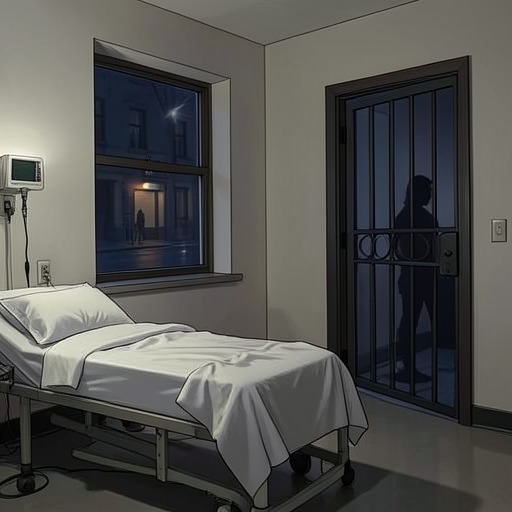
A young woman wakes on a trolley in a white hospital room with no memory of herself. She feels grateful to be alive, accepts the name Mary when asked, and cannot explain where she has been or why her legs and clothing seem damaged.
A staff member sends her away with her black bag and a few possessions. Mary understands almost nothing about the place, but assumes the people in white are keepers and that she belongs among the helpless people they guide.
Later that morning
Escape into the Streets
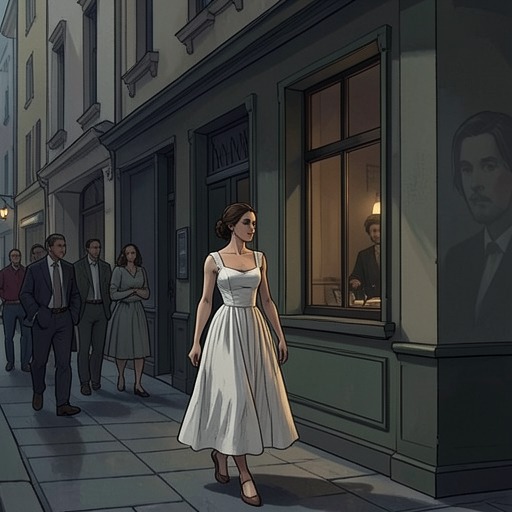
After struggling through the hospital corridors, Mary slips outside and removes heavy devices attached to her feet. She joins the traffic of [London](entity:location-recall-location-london-420923d4a60a), where people, vehicles, buildings, and signs seem strange, purposeful, and faintly threatening.
She sorts passers-by into kinds according to their bodies, movements, and apparent injuries, but cannot tell what is alive or where she fits. As the sky darkens and the city seems to break down around her, she runs toward the open land beyond it.
That evening
The Night in the Hollow
Mary reaches a green stretch beyond the city and hides beneath a leaning tree. Pain and terror overwhelm her; she believes she is dying as the air and sky seem to collapse, and she curls into the hollow in the ground.
Her death-like collapse closes the first phase of her wandering. The narrator’s account leaves uncertain whether this is literal death, sleep, or a vision, establishing the boundary between life and death that will haunt the story.
The following morning
A Second Awakening
Mary wakes in a park, remembering the previous day but not the life before it. She can name birds and other familiar things, and recognizes that she has lost her memory, though she has no clear idea what that means.
Seeing several people gathered among abandoned buildings, she approaches despite her fear. Her new ability to name things offers a small foothold in a world that still feels disjointed and unfamiliar.
That morning
The Tramps’ Fire
The group welcomes Mary into its warmth. She gives the name Mary, drinks from a bottle, and listens to Neville boast about his former success selling his time before choosing life without money.
Mary begins to suspect that beneath the many visible kinds of people there are only two kinds: people, and the different things that can happen to them. The tramps’ poverty and refusal to sell their time become her first lesson in money and social belonging.
Later that morning
Sharon Takes Charge
[Sharon](entity:character-recall-character-sharon-c1e11e522a83), a large red-haired woman, intervenes when Neville makes a move toward Mary. She drives him off, claims Mary needs looking after, and leads her away from the tramps’ camp.
Sharon assumes Mary has been sexually assaulted and talks about men, sex, and her own preferences with blunt familiarity. Mary follows her because she is in pain and has no better plan, accepting Sharon’s promise to get her fixed up.
Late that morning
The Garage and the Pain
[Sharon](entity:character-recall-character-sharon-c1e11e522a83) brings Mary to a place where Tom, nicknamed Impy, is sheltering among old cars and bottles. She helps Mary remove the complicated bands and clips tangled around her clothes and body, discovering that Mary is far more helpless than she realized.
Mary describes her back pain as simple, while Sharon jokes and fusses over her. The encounter links Mary’s unexplained physical injuries to the violence of the night she cannot remember.
Around midday
The Search for Money
As [Sharon](entity:character-recall-character-sharon-c1e11e522a83) guides Mary through [London](entity:location-recall-location-london-420923d4a60a), she searches Mary’s bag and finds two scraps of money. She buys alcohol, and Mary discovers how drinking can alter perception and how people make an intimate ritual out of consuming it.
Sharon denies being an alcoholic, but Mary recognizes the denial as another sign of dependence. The narrator describes drunkenness as escape from the self, a pattern that will recur in the people Mary meets.
That afternoon
The Botham House
[Sharon](entity:character-recall-character-sharon-c1e11e522a83) takes Mary across the river to the [Botham home](entity:location-recall-location-1d9ed5d23261), where her father tries to throw her out. Sharon and her parents tumble into a familiar family quarrel, and Mary watches the household’s noisy affection and recriminations with bafflement.
Gavin, Sharon’s brother, stands apart from the others and tells Mary that they are lush-artists who never know what is going on. Sharon gives Mary a stand-up wash and clothes, then prepares to take her out again despite her parents’ protests.
That evening
The Public House
[Sharon](entity:character-recall-character-sharon-c1e11e522a83) brings Mary to a crowded pub where noise, drink, and exchange overwhelm her. Mary listens closely to Sharon’s talk and begins to understand that language may contain an order absent from the streets themselves.
Sharon drinks heavily and becomes emotional, confessing her anxieties and her inability to stop pursuing men despite the consequences. Mary’s growing grasp of other people’s words does not yet equip her to judge their intentions.
Later that night
Trev and Jock
[Sharon](entity:character-recall-character-sharon-c1e11e522a83) introduces Mary to [Trev and Jock](entity:relation-recall-relation-trev-and-jock-312fa9546a2b), who treat her as someone they can exploit. Sharon calls Mary simple and presents her as available, leaving Mary to face the men without protection.
The men take the women away from the pub. [Trev](entity:character-recall-character-trev-56ac2ef4ee61)’s threats and handling make clear that Mary is in danger, while [Jock](entity:character-recall-character-jock-c6e9cea808f3) and Sharon disappear into the night together.
During the night
The Brick
[Trev](entity:character-recall-character-trev-56ac2ef4ee61) assaults Mary in a derelict room. She struggles to understand what he wants, and his violence recalls the pain and bodily confusion she has already experienced without memory.
When Trev falls asleep, Mary finds a heavy wedge of brick and strikes him twice in the mouth. She waits as [Sharon](entity:character-recall-character-sharon-c1e11e522a83) and [Jock](entity:character-recall-character-jock-c6e9cea808f3) wake, then escapes without explaining herself, having discovered that she can fight back against the special damage done to her.
The morning after the assault
The Policeman’s Warning
As Mary leaves, a policeman grabs her and takes her onto a black bus. He questions her, recognizes something about her, and then releases her after deciding she is not one of the people he has been pursuing.
Mary recognizes his breath as the dead-smelling presence from her first awakening. He warns her to stay away from that kind of life, and she remembers that he once told her to be good.
A few days later
Tea at the Bothams’
Mary returns to the [Botham home](entity:location-recall-location-1d9ed5d23261), where [Mrs Botham](entity:character-recall-character-mrs-botham-1676e94584fa) serves tea and insists that Mary has amnesia. Gavin corrects her stories about amnesia and alcoholism, while the family’s shared history of drinking emerges through their arguments.
Gavin tells Mary that he is queer and will not try to have sex with her. She finds comfort in the household, and the narrator explains that each member of the family misunderstands her condition in a different way.
During her first days with the Bothams
Learning the Present
Mary learns her body, reads books from Gavin’s collection, and studies the streets with him and [Mrs Botham](entity:character-recall-character-mrs-botham-1676e94584fa). Her perceptions are extraordinarily detailed because she has no remembered past to dull the present; she can even tell the time without looking.
Books introduce her to language, history, stories, and imagined worlds, though she initially misunderstands what they are about. She grows attached to the household and its routines, even as sleep brings violent, recurring nightmares.
During the same early period
The Dreaming Past
Mary’s nights are filled with images she has never consciously seen: a red beach, burning air, and a force that mangles her while she sleeps. She senses that the dreams come from the past, though she cannot remember what they mean.
The narrator insists that Mary asked for the violence and wanted more. The statement makes her suffering feel bound to a forgotten history rather than a random misfortune.
Soon after Mary settles with the family
The Attack on the Bothams
[Jock](entity:character-recall-character-jock-c6e9cea808f3) and [Trev](entity:character-recall-character-trev-56ac2ef4ee61) return to the [Botham home](entity:location-recall-location-1d9ed5d23261) intending to attack its occupants and seize Mary. [Mrs Botham](entity:character-recall-character-mrs-botham-1676e94584fa)’s reinforced shoe incapacitates Jock, and Gavin knocks Trev down before he can reach Mary.
[Mr Botham](entity:character-recall-character-mr-botham-02831d579860) is badly injured in the invasion. Mary watches the violence without moving, then leaves the next day with Gavin, burdened by the conviction that her presence has brought harm to the household.
The day after the attack
A Visit from Prince
Mary meets the policeman again and learns his name is [John Prince](entity:character-recall-character-john-prince-99b7dc47b930). He says she has broken the law, explains that the consequence is time, and offers her a place to stay and help finding work.
Mary is unsettled by [Prince](entity:character-recall-character-prince-0d58ca27fcd5)’s eyes and his certainty that he knows her. Gavin takes her back to the damaged [Botham home](entity:location-recall-location-1d9ed5d23261), but the family cannot afford to keep her there while [Mr Botham](entity:character-recall-character-mr-botham-02831d579860) is hospitalized.
On the walk to the hostel
Mary’s First Memory
Carrying a suitcase toward the address [Prince](entity:character-recall-character-prince-0d58ca27fcd5) gave her, Mary suddenly remembers a childhood desire to look through other people’s windows. She recalls standing outside houses at dusk, longing to see the lives gathered within them.
The memory is brief and incomplete, but it gives her the first evidence of a life before the hospital. She continues toward the hostel with a new confidence that her past may return in time.
The following days
The Hostel’s Rules
Mary moves into the Church Army young women’s hostel, where she shares a basement room with Trudy and Honey. The residents have been battered by poverty, abuse, and difficult relationships; strict rules threaten to remove anyone who causes trouble.
Mary asks how to find a job and make money. She watches the women’s struggles and resolves to stay in the shallows of life, afraid that a deeper fall may leave her unable to rise.
About a week after Mary arrives at the hostel
The Waitress Job
Mary finds a sign seeking a waitress and is hired by Mr Garcia, who tells her to start the next morning. She is relieved that he does not require insurance papers or a formal work history.
The job gives Mary a way to sell her time and earn money. She approaches the prospect with optimism, believing she can learn the work as quickly as she has learned other things.
The weeks after Mary starts work
Life at the Café
Mary learns the routines of the [Garcia café](entity:location-recall-location-d68c705e2894) and grows fond of its familiar rhythms. She works alongside [Alan](entity:character-recall-character-alan-e41a9d4c99ac), who pulls at his thinning hair, and [Russ](entity:character-recall-character-russ-f27c0ce88f6c), whose flamboyant talk disguises insecurity and illiteracy.
Alan falls in love with Mary, while Russ teases and touches her and speaks of imagined affairs with film stars. Mary enjoys the sense of inclusion at work but cannot yet read the desires and fears shaping the men around her.
During Mary’s second week at the hostel
The Pink Letter
A letter arrives for Mary bearing instructions to open it alone. Inside, [John Prince](entity:character-recall-character-john-prince-99b7dc47b930) says he has been investigating her identity and includes information about Amy Hide, a missing woman believed to have been murdered.
The letter also contains a photograph of Amy, and Mary recognizes the face as her own. The discovery fractures her sense of herself: she begins to wonder whether Mary is Amy, or a new person emerging from a life she cannot recall.
That night and the following days
The Mirror and the Photograph
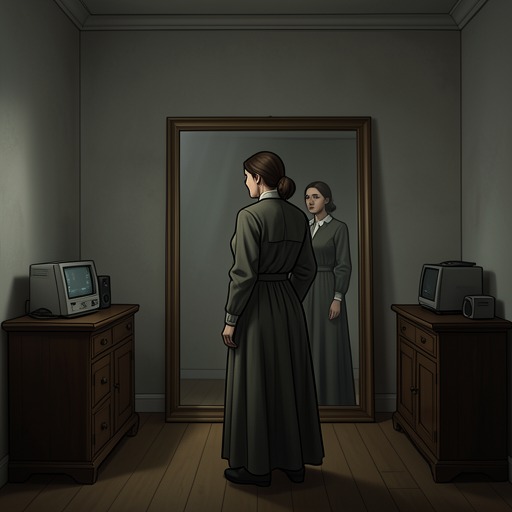
Mary compares her face with the photograph and sees a woman who looks older, more knowing, and morally unfamiliar. The possibility that she has lived as Amy makes her sick with shame and fear.
She repeatedly studies herself in the mirror, trying to determine whether the face belongs to someone good. Her dreams become more uniform: Amy runs from a beast, then becomes its prey, as the past presses toward her waking life.
During the following weeks
The Hostel Forms
Mrs Pilkington tells Mary she must complete forms and can remain at the hostel for only three months. Mary finds the official language inaccessible and experiences bureaucracy as another barrier keeping her from a different life.
She continues working and reading, but news from [Prince](entity:character-recall-character-prince-0d58ca27fcd5) does not arrive. The photograph, her uncertain identity, and her growing poverty make each day feel like a long wait.
After Mary receives Prince’s address
The Botham Home Revisited
Mary visits the address and meets Marge, who mistakes her for [Baby](entity:character-recall-character-baby-8281d9ddd360) before learning that she has come to ask about Amy Hide. Marge and George react painfully to Amy’s name and describe the harm she caused her parents.
In Amy’s old room, Mary sees photographs of the family and of [Michael Shane](entity:character-recall-character-michael-shane-a6d2f205a290). The room feels emptied of its former life, but the photographs give her clues about the people and relationships that may belong to her past.
The day after the visit
The Lonely Café Return
Mary returns to work and finds [Alan](entity:character-recall-character-alan-e41a9d4c99ac) and [Russ](entity:character-recall-character-russ-f27c0ce88f6c) suddenly cold toward her. She suspects they know something about her past or are reacting to her living at the hostel, but she cannot discover what has changed.
Alan then offers her a furnished attic room in the squat where he lives, with Russ insisting that she will be better off there. Mary accepts, relieved to leave the hostel and unaware of the risks of the new household.
That night and the following week
The Squat Household
Mary moves into the squat, a crowded house of people with their own failures, ambitions, and troubles. She settles into the attic room, buys toiletries and books, and finds comfort in having a space that feels like hers.
[Alan](entity:character-recall-character-alan-e41a9d4c99ac) hovers around her with anxious devotion, while [Russ](entity:character-recall-character-russ-f27c0ce88f6c) openly flirts and imagines a future with her. Mary does not understand the imbalance between them, or how her presence is intensifying Alan’s suffering.
That Friday evening
Prince’s Invitation
[Prince](entity:character-recall-character-prince-0d58ca27fcd5) calls Mary at the squat and asks whether she has remembered anything. She has not, so he invites her to go out with him the next night and insists that he will collect her from work.
Mary refuses at first, but Prince makes clear that he intends to show her the sights. His pursuit renews her suspicion that he knows more about her than he is telling her.
The same evening
Russ and Alan’s Jealousy
[Alan](entity:character-recall-character-alan-e41a9d4c99ac) tentatively asks Mary to spend the next evening with him, but she tells him she is seeing a man. [Russ](entity:character-recall-character-russ-f27c0ce88f6c) then kisses her in front of Alan, and Mary responds without understanding how deeply the moment wounds him.
Alan’s jealousy becomes a physical crisis of hair-pulling and grief. The narrator describes how love can turn a person’s own thoughts and surroundings into instruments of pain.
The following evening
The City’s Cruelties
[Prince](entity:character-recall-character-prince-0d58ca27fcd5) drives Mary through [London](entity:location-recall-location-london-420923d4a60a), showing her the scenes of exploitation and suffering: a woman employed to spend the night with a man, the city's utility tunnels, a child used for begging, and a man spending money on the street. This tour makes Mary begin to understand the inequality. Prince portrays London
Later that evening
The Murder Case
At dinner, [Prince](entity:character-recall-character-prince-0d58ca27fcd5) explained that Amy Hyde disappeared after getting too close to dangerous people. The police had a man who admitted to killing her, but they didn't find the body; Mary's appearance made people question the truth again. Mary asked whether murder itself was a crime and what punishment murder would bring
Late that night
The Club Behind the Door
[Prince](entity:character-recall-character-prince-0d58ca27fcd5) takes Mary to a secret club where people watch and participate in performative violent scenes. He said Amy used to come often, especially liking to watch live performances
After the club visit
The Walk Back to the Squat
[Prince](entity:character-recall-character-prince-0d58ca27fcd5) said that behind the hidden door there were only mattresses for sexual use, and then he drove Mary back to her temporary shelter. He urged her to think about the photos from Amy's old room and traced back his own past along with the photos. When Mary returned, she found Allen waiting for her
The following morning
Mary and Alan Together
Allen told Mary he loved her and was willing to die for her. Mary could not understand what this declaration meant, but she convinced Allen they were a couple. Soon, everyone in the house noticed they were getting close
That Wednesday evening
The Rivalry in the Garden
Mary was reading a book in the garden, while Allen was watching her from inside the house, preparing to approach her. Larry rushed to her side, playing around with her, and brought her back inside; meanwhile, Allen quietly pulled out a large amount of hair. Mary felt sympathy for Allen, but
The following nights
The Strained Nights
The following nights, Allen and Mary continued to sleep in the same bed, but it seemed neither of them found comfort. Mary longed to return to sleeping separately and worried that she had acquired some unwanted power that could make Allen uncomfortable
A Sunday soon afterward
The Swimming Pool
Not long after, the residents of the temporary shelter went to the swimming pool. Mary watched them play and laugh, especially noticing Ray and Paris, and observed the different bodies around her with new eyes, noticing differences in race, gender, age, and body type
That Sunday evening
Michael on Television
a television program announced that michael sheen has returned from ethiopia. mary recognized him from a photo in amy's old room and remembered that maggie said he was famous and had once cared for amy. this television report provides new clues for mary to find her identity. she decided to contact michael
The next day
Mary Calls Michael
Mary called [Michael Shane](entity:character-recall-character-michael-shane-a6d2f205a290) and told him that she was Amy's cousin. Michael said Amy was his favorite subject to study, although his schedule was complicated, he still agreed to meet with her. Mary traveled through [London](entity:location-recall-location-london-420923d4a60a) to his office, thinking about time, winter, and her desire to get more involved in
That afternoon
Michael’s Story
Michael recognized that Mary and Amy were similar, and described Amy as his first love: exciting, passionate, insecure, and cruelly humiliating. He told how Amy seemed to burn his unfinished script, while reading passages from it through a locked door. The narrator corrected Michael's account, revealing that Amy burned
Immediately after the meeting
Jamie’s Offer
Michael left to be called for work, sent Mary away; his assistant [Jamie](entity:character-recall-character-jamie-9ab1c29c9c6f) escorted her out. Jamie was angry with Michael, complaining that he was treated as a servant, but upon noticing Mary's clothing and her distress, his anger turned into kindness
After Mary’s visit to Michael
Mary Ends It with Alan
Mary realized she could no longer let Allen sleep with her. She told him he could not come to her room at night, and explained that she could not continue being his mistress
The following Sunday
Jamie’s Lunch Gathering
[Jamie](entity:character-recall-character-jamie-9ab1c29c9c6f) invited Mary to his spacious apartment for lunch. There, she met Joe, [Augusta](entity:character-recall-character-augusta-a3f327f31a24), Lily, and Lily's child Carlos. The guests came in pairs, living in a world filled with money and familiarity; Mary had never experienced such a life
During the lunch gathering
Amy Recognized
In the bathroom, a woman from the gathering recognizes Mary as Amy Hide and tells her not to pretend she does not know. Mary asks her not to tell anyone, then sits alone and tries to accept that the past will not simply disappear.
The encounter confirms that Amy’s identity is known among [Jamie](entity:character-recall-character-jamie-9ab1c29c9c6f)’s circle. Mary’s fear shifts from uncertainty about whether she is Amy to the prospect that other people remember a version of her she cannot face.
That evening
A Hand to Hold
[Jamie](entity:character-recall-character-jamie-9ab1c29c9c6f) walks Mary partway home through the park and asks to hold her hand. His warmth and steadiness feel different from [Alan](entity:character-recall-character-alan-e41a9d4c99ac)’s anxious touch, and Mary begins to imagine love as an imperfect circle of people trying to support one another.
She returns to the squat hoping to explain this idea to Alan. Instead, she finds him hanging in his room, with a note about his hair on the table.
That evening
Alan’s Death
Mary discovers [Alan](entity:character-recall-character-alan-e41a9d4c99ac)’s suicide and understands that the relationship, his hair loss, and her own presence may have contributed to a pain she never knew how to answer. The household summons the police and gives written statements about what happened.
[Russ](entity:character-recall-character-russ-f27c0ce88f6c) accuses Mary of causing Alan’s death and says she does not care. Mary writes that she is sorry and did not mean to do it, but cannot offer an explanation that would make the loss comprehensible.
The days after the suicide
Confinement After Alan’s Death
Mary is taken through a series of institutions, searches, and locked rooms. She spends several days confined among other women and is given pills that make the present recede.
The experience strips away her job and her place in the squat, leaving her once again without a home. [Prince](entity:character-recall-character-prince-0d58ca27fcd5) eventually comes to get her out, using his authority to secure access where others cannot.
At the end of Mary’s confinement
Mr Wrong Recants
[Prince](entity:character-recall-character-prince-0d58ca27fcd5) tells Mary that [Mr Wrong](entity:character-recall-character-mr-wrong-e62769a6f688) has withdrawn his confession to Amy’s murder after learning that she is alive. He says the man originally claimed that he killed her because she asked him to.
Mary hears that her job and the squat are gone and that she has used up her good luck. She calls [Jamie](entity:character-recall-character-jamie-9ab1c29c9c6f), who agrees to take her in, while Prince warns her to beware her own power.
Soon after Mary’s release
Moving in with Jamie
Mary moves into [Jamie](entity:character-recall-character-jamie-9ab1c29c9c6f)’s flat, where she meets [Jo](entity:character-recall-character-jo-ef997b5228d8), [Augusta](entity:character-recall-character-augusta-a3f327f31a24), and Lily again. Jamie urges her to drink, smoke, and eat heavily, presenting self-destruction as a way to avoid doing anything with life.
The women around him have different routines and ambitions, but none seems to need conventional work. Mary observes a world of wealth and idleness that feels at once safer and more disturbing than the poverty she has left.
The weeks after Mary moves in
The Flat’s New Life
Mary learns the habits of [Jamie](entity:character-recall-character-jamie-9ab1c29c9c6f)’s household. Lily devotes herself to Carlos, [Jo](entity:character-recall-character-jo-ef997b5228d8) fills her days with activities, and [Augusta](entity:character-recall-character-augusta-a3f327f31a24) pursues men and dramatic reversals; Jamie reads, drinks, and insists that none of them is doing anything meaningful.
Mary reflects on women’s strength and the ways they imitate male power. She also recognizes that Jamie’s wealth shields him from ordinary necessity without freeing him from his own despair.
During Mary’s first weeks with Jamie
Augusta’s Memories of Amy
[Augusta](entity:character-recall-character-augusta-a3f327f31a24) tells Mary that she knew her before, when she was called Amy. She remembers Amy behaving dangerously with men and then calling her parents, and recalls Amy’s devotion to a man she said she would not mind being killed by.
Mary learns that her former self was capable of cruelty and intense attachment. The account deepens her fear that she cannot separate herself from Amy’s actions simply by losing her memories.
After Mary’s conversations with Augusta
Jamie’s Collapse
Mary asks [Jamie](entity:character-recall-character-jamie-9ab1c29c9c6f) why he avoids commitment, and he appears unable to answer directly. His drinking, cynicism, and withdrawal suggest that his apparent freedom conceals a deeper inability to act.
Mary begins to feel lonely and desperate for someone who can make her feel whole. Jamie is the person she wants, but he remains emotionally unavailable, placing her at risk of repeating old patterns.
Some time after Alan’s death
Mary’s Power Over Jamie
Mary discovers that she can make [Jamie](entity:character-recall-character-jamie-9ab1c29c9c6f) feel bad by withholding warmth and staring at him in silence. She deliberately cultivates this power, taking satisfaction when he becomes anxious and asks what is wrong with her.
When Jamie confronts her, Mary turns the confrontation into a sexual encounter. For a moment, her loneliness and need seem relieved, though the new intimacy is shaped by her deliberate use of emotional pressure.
As winter approaches
The Rain and the Isolation
The weather turns to persistent rain, and [Jamie](entity:character-recall-character-jamie-9ab1c29c9c6f) complains that it feels like an insult. Mary moves through the flooded streets and shops, where shortages of goods and money contrast with the seemingly inexhaustible rain.
At night she cries to draw Jamie close, and he answers with kisses and sex that feel like an attempt to hold off time. Their closeness grows, but Jamie cannot remember what intimacy is for, and neither can Mary.
Before Christmas
Mr Wrong Is Released
[Prince](entity:character-recall-character-prince-0d58ca27fcd5) telephones to say that [Mr Wrong](entity:character-recall-character-mr-wrong-e62769a6f688) has completed his sentence and is out. He warns that the man has spoken of coming to get Mary, but promises that the police will watch him.
Mary seems unmoved by the threat and tells [Jamie](entity:character-recall-character-jamie-9ab1c29c9c6f) only that Prince is a policeman. Her emotional life has narrowed around the flat, leaving the coming danger distant and unreal.
At Christmas
The Household Leaves
The other residents leave the flat for the holidays: [Jo](entity:character-recall-character-jo-ef997b5228d8) goes skiing, [Augusta](entity:character-recall-character-augusta-a3f327f31a24) departs with wealthy companions, and Lily takes Carlos to visit Bartholomé. Mary and [Jamie](entity:character-recall-character-jamie-9ab1c29c9c6f) are left alone together.
Mary cuts the telephone cord, ensuring that their isolation will continue. Jamie gives her money for the holiday and asks her not to cry too much, while the rain and the shrinking flat close around them.
Over the ten days of Christmas
The Christmas Isolation
Mary and [Jamie](entity:character-recall-character-jamie-9ab1c29c9c6f) invert their days and nights, drink heavily, sleep through afternoons, and have sex as part of a repetitive routine. Mary cooks increasingly strange meals, neglects washing, and makes Jamie wear one of the absent women’s dresses.
She tells him the story of her death-like experience, her possible identity as Amy, the man who tried to kill her, and the policeman who may come for her. Jamie does not eat the final meal she prepares, and Mary’s behavior becomes increasingly detached from ordinary life.
The final night of the Christmas isolation
Mary Finds Amy Again
After [Jamie](entity:character-recall-character-jamie-9ab1c29c9c6f) leaves his food untouched, Mary breaks down before the mirror. She sees a face rise from the glass and understands that she has found herself again: Mary and Amy are no longer divided in her mind.
Her recognition ends the dissociative period of the [Christmas](entity:time-recall-time-0cffe7da2c4d) isolation, but it also prepares her to face the person whose violence began the cycle. She is now able to remember enough to confront what happened.
After Mary recognizes Amy
Amy’s Quiet Life
The narrative shifts to Amy living in a quiet suburban house with [Prince](entity:character-recall-character-prince-0d58ca27fcd5). She keeps house, reads, and describes her days to him, while he returns from work and listens closely to the ordinary details.
Amy knows that she has changed and that the life she leads is not wholly hers. Bruises remain from her past, but she no longer blames [Jo](entity:character-recall-character-jo-ef997b5228d8) for them, and she hopes one day to tell [Jamie](entity:character-recall-character-jamie-9ab1c29c9c6f) that she is sorry.
During Amy’s life with Prince
The Old Flame
Amy and [Prince](entity:character-recall-character-prince-0d58ca27fcd5) discuss [Michael Shane](entity:character-recall-character-michael-shane-a6d2f205a290), whom Amy calls an old flame. Prince says Michael really did become queer after Amy, despite Michael’s own account of the matter.
The exchange shows that Amy can now discuss her past without the same fear or bravado. Prince’s teasing also hints at his own emotional closeness to her, though neither names what their relationship means.
A few weeks into Amy’s life with Prince
The Execution Photograph
While browsing [Prince](entity:character-recall-character-prince-0d58ca27fcd5)’s bookcase, Amy finds an old photograph showing a hooded executioner, several sickened officials, and a condemned man staring into the camera with a desperate, complicit expression. Prince has written two words on its back: “[You wait](entity:expression-recall-expression-you-wait-bf4f05c52f48).”
The photograph unsettles Amy, and the doorbell rings before she can understand its significance. Its image foreshadows the meeting that must still take place between Amy and the man connected to her death.
That afternoon
Amy Reunites with Baby
The visitor is [Baby](entity:character-recall-character-baby-8281d9ddd360), Amy’s sister, who embraces her after believing her dead. Baby says Amy looks like the sixteen-year-old she was before she changed and admits that Amy had been awful to the family.
Baby is married and has a daughter named Mary. The sisters exchange a childhood rhyme about knowing and loving one another, and Baby promises that the rest will return to Amy in time.
That night and the following day
The Long Wait
Amy spends the night waiting for [Prince](entity:character-recall-character-prince-0d58ca27fcd5), who has called to say he will return but does not arrive. She cannot make herself remember more, and the diary and books do not supply a complete past.
The next morning she walks through the town and sits in the park, feeling that life is separate from her and that she has lived long enough. Her exhaustion and strange calm make her ready for the encounter she has been postponing.
The following day
Prince Finds Amy
[Prince](entity:character-recall-character-prince-0d58ca27fcd5) finds Amy on a park bench and apologizes. She tells him that everything is all right, while her feverish pallor suggests that the final passage is already beginning.
The two approach one another with an intimacy that feels both tender and ominous. Amy is ready to go with him, though she does not yet know what the next meeting will demand.
Before dawn
The Journey to the Club
Amy wakes in [Prince](entity:character-recall-character-prince-0d58ca27fcd5)’s bed, exhausted and happy, and asks whether she is going to die. Prince says that one last thing remains: they must go to see [Mr Wrong](entity:character-recall-character-mr-wrong-e62769a6f688).
As they drive through misty [London](entity:location-recall-location-london-420923d4a60a), Prince explains that Amy needs to face the man who tried to kill her before she can have a new life. Amy understands that there is no new beginning without confronting the past.
Before dawn at the abandoned club
Behind the Door
[Prince](entity:character-recall-character-prince-0d58ca27fcd5) takes Amy back to the derelict club and leads her through the hidden door. He leaves her alone in a long, red-lit room, where a hooded man waits beyond a veil.
The man asks whether she remembers. Amy recognizes him and moves toward him rather than running away, choosing to make the encounter happen sooner instead of delaying it.
At the climax
Amy Faces Mr Wrong
Amy asks whether [Mr Wrong](entity:character-recall-character-mr-wrong-e62769a6f688) will kill her again. He says that she is already dead, and that life itself is murder; he identifies himself as both the policeman and the murderer, collapsing the novel’s apparent division between protector and threat.
He embraces Amy, and she experiences again the speed, burning air, and red beach of her nightmares. The encounter does not simply end her life: it carries her back into the beginning of the cycle.
Immediately after the confrontation
The Cycle Begins Again
Amy wakes in her childhood bedroom, crying, as her mother tells her she is herself again and sends her out to be good. Her father forgives her and urges her to take care as she leaves the house.
The return to childhood reveals the cyclical shape beneath Mary’s story: the adult ordeal has been bound to an earlier life and will begin again. The ending offers a new start, but not an escape from the forces that made the cycle possible.
After Amy leaves home
The Narrator Waits
In the epilogue, the narrator promises not to do anything to Amy unless she wants it, then watches her walk down the path with tears in her eyes. The narrator feels compelled to repeat something that seems to have happened before, but admits to being tired and no longer fully in control.
The narrator waits across the street as the young Amy reaches the road. The promise and the looming approach leave the cycle unresolved, suggesting that the same danger may begin again under a different claim of consent.